
Anúncios
Periodization for Peak Performance: A 4-Phase Training Model for Athletes to Optimize Strength and Endurance for 2026 Competitions
As the 2026 competition season draws nearer, athletes and coaches alike are meticulously planning their training regimens to ensure peak performance when it matters most. The pursuit of athletic excellence is a complex journey, demanding not just raw talent and unwavering dedication, but also a scientifically sound approach to training. This is where the concept of athlete periodization training becomes absolutely critical. Periodization is not merely a buzzword; it is a systematic, long-term athletic plan that strategically varies training intensity, volume, and exercises to maximize performance, prevent overtraining, and minimize the risk of injury. For any athlete aiming to dominate their sport in 2026, understanding and implementing an effective periodization model is non-negotiable.
This comprehensive guide delves into a robust 4-phase periodization model specifically designed to optimize strength and endurance for competitive athletes. We will break down each phase, explaining its objectives, typical training methodologies, and how it contributes to the overarching goal of achieving peak physical condition for major events. Whether you’re a coach looking to refine your programming or an athlete seeking to understand the ‘why’ behind your workouts, this article will provide invaluable insights into mastering athlete periodization training.
What is Athlete Periodization Training and Why is it Essential?
At its core, periodization is the systematic organization of training into cycles to achieve specific physiological adaptations at predetermined times. Think of it as a meticulously crafted roadmap for your athletic journey, guiding you through different training blocks with distinct goals. Without periodization, training often becomes a haphazard accumulation of workouts, leading to plateaus, burnout, and an increased susceptibility to injuries. For the demanding competitive landscape of 2026, a haphazard approach simply won’t cut it.
The human body is incredibly adaptable, but it also has limits. Continuous high-intensity training, without adequate recovery or variation, eventually leads to overtraining syndrome, where performance declines, immune function is compromised, and motivation wanes. Conversely, inconsistent or insufficient training will fail to elicit the necessary physiological changes for elite performance. Periodization strikes a delicate balance, ensuring that athletes are consistently challenged but also given sufficient time to recover and adapt.
Anúncios
The primary objectives of athlete periodization training include:
- Maximizing Performance: By strategically peaking at the right time for competitions.
- Minimizing Overtraining: Preventing physical and mental burnout through planned variations in training load.
- Reducing Injury Risk: Strengthening the body progressively and allowing for recovery, thus making it more resilient.
- Promoting Long-Term Athletic Development: Building a robust foundation of physical qualities that can be sustained and improved over multiple seasons.
- Optimizing Adaptations: Targeting specific physiological systems (e.g., strength, power, endurance) at opportune times for maximum benefit.
The Macrocycle, Mesocycle, and Microcycle: Understanding the Structure
Before diving into the 4-phase model, it’s crucial to understand the hierarchical structure of periodization. This structure allows for both long-term vision and short-term adaptability:
- Macrocycle: This is the longest training cycle, typically spanning an entire year or even several years, culminating in a major competition (like the 2026 season). It encompasses all phases of training and provides the overarching framework for long-term development.
- Mesocycle: A mesocycle is a block of training within the macrocycle, usually lasting 2-6 weeks. Each mesocycle has a specific training goal, such as building foundational strength, improving power, or enhancing endurance. Our 4-phase model essentially comprises distinct mesocycles.
- Microcycle: The shortest training cycle, typically 1-2 weeks long, often aligning with a single week of training. Microcycles focus on daily and weekly training variations, including specific workouts, rest days, and recovery strategies.
This nested structure ensures that every workout, every week, and every month contributes meaningfully to the athlete’s ultimate goal of peak performance. Now, let’s explore the 4-phase model that will guide athletes towards their 2026 aspirations.
Anúncios
Phase 1: General Preparation (Off-Season/Base Building)
The General Preparation Phase is the foundational bedrock of any successful athlete periodization training plan. Typically occurring immediately after a competition season or during the off-season, this phase is characterized by high volume and relatively lower intensity. Its primary goal is to build a broad base of general physical preparedness, address muscular imbalances, and facilitate active recovery from the previous season’s demands.
Objectives of General Preparation:
- Rehabilitation and Injury Prevention: Addressing any nagging injuries and strengthening weak links to prevent future issues.
- Aerobic Base Development: Enhancing cardiovascular fitness and endurance capacity.
- General Strength and Hypertrophy: Building muscle mass and overall strength, often through higher repetition ranges.
- Technique Refinement: Working on fundamental movement patterns and sport-specific techniques without the pressure of high intensity.
- Mental Recharge: Allowing athletes to decompress and return to training refreshed and motivated.
Training Methodologies:
- Volume: High.
- Intensity: Low to moderate.
- Resistance Training: Focus on compound movements (squats, deadlifts, presses, rows) with moderate loads (60-75% 1RM) for 8-15 repetitions. Incorporate accessory exercises for muscle balance and core stability.
- Cardiovascular Training: Long, slow distance (LSD) running, cycling, swimming, or rowing at a conversational pace. Aim for steady-state efforts to improve aerobic capacity.
- Flexibility and Mobility: Extensive stretching, foam rolling, yoga, or dynamic mobility drills to improve range of motion and tissue quality.
- Sport-Specific Drills: Introducing foundational drills at lower intensities to maintain skill proficiency without excessive stress.
This phase is crucial for laying the groundwork. Rushing through it or neglecting it altogether can lead to a less resilient athlete prone to injury and premature plateaus in later, more intense phases. A strong general preparation phase ensures the athlete is robust enough to handle the increasing demands of subsequent training.
Phase 2: Specific Preparation (Strength & Power Development)
Following the general preparation phase, athletes transition into the Specific Preparation Phase, where the training becomes more focused and intense. This phase is dedicated to developing maximal strength and power, which are critical components for most athletic endeavors. The volume typically decreases while the intensity significantly increases, challenging the neuromuscular system to adapt and become more efficient.
Objectives of Specific Preparation:
- Maximal Strength Development: Increasing the athlete’s ability to exert force against external resistance.
- Power Development: Enhancing the ability to produce force quickly (e.g., jumping, sprinting, throwing).
- Sport-Specific Endurance: Beginning to integrate endurance elements that mimic the demands of the sport more closely.
- Refined Technique under Load: Practicing sport-specific movements with higher resistance or at faster speeds.
Training Methodologies:
- Volume: Moderate to low.
- Intensity: High.
- Resistance Training (Strength): Focus on heavy lifting with compound movements (75-90% 1RM) for 1-6 repetitions. Prioritize proper form and progressive overload. This is where athletes build raw strength.
- Resistance Training (Power): Incorporate plyometrics (box jumps, bounds), Olympic lifts (cleans, snatches), and medicine ball throws. These movements are performed with explosive intent and lower repetitions.
- Interval Training: Introducing higher intensity cardiovascular work with specific work-to-rest ratios that mimic game or race demands.
- Sport-Specific Drills: Implementing drills that require higher intensity and speed, focusing on accelerating, decelerating, and changing direction effectively.
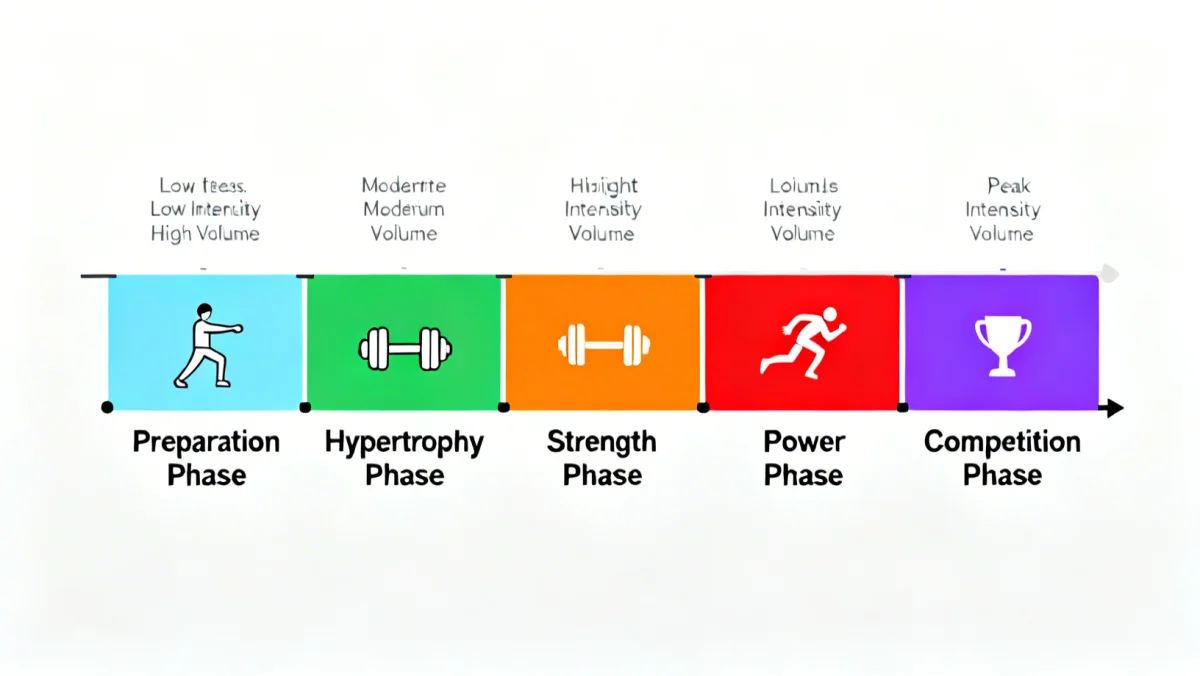
This phase is where athletes truly develop the physical capacities that will enable them to perform at an elite level. The shift from high volume to high intensity is a strategic stressor that forces the body to adapt and become stronger and more powerful. It’s a demanding phase, requiring careful monitoring to prevent overtraining and ensure adequate recovery.
Phase 3: Pre-Competition (Tapering & Peaking)
As the competition season approaches, the Pre-Competition Phase becomes paramount. This phase is often referred to as the ‘taper’ and is arguably the most delicate and misunderstood part of athlete periodization training. The goal here is not to gain new fitness but to allow the body to recover from the accumulated fatigue of the previous intense training blocks while maintaining or slightly improving fitness levels. The objective is to arrive at competition feeling fresh, strong, and ready to perform at peak capacity.
Objectives of Pre-Competition:
- Optimal Recovery: Reducing accumulated fatigue to allow for supercompensation.
- Maintain Fitness: Sustaining strength, power, and endurance adaptations gained in previous phases.
- Mental Freshness: Ensuring the athlete is mentally sharp and highly motivated.
- Refined Strategy and Tactics: Focusing on sport-specific strategies, mental preparation, and fine-tuning technique.
Training Methodologies:
- Volume: Significantly reduced (typically 40-60% of previous phase).
- Intensity: Maintained or slightly increased (to preserve adaptations).
- Resistance Training: Drastically reduce volume (fewer sets and reps), but maintain intensity with heavy loads to preserve strength and power. Focus on neural activation rather than muscle fatigue.
- Cardiovascular Training: Reduce duration and frequency of sessions, but include short bursts of high-intensity efforts to maintain cardiovascular fitness without causing excessive fatigue.
- Sport-Specific Drills: Focus heavily on high-quality, low-volume sport-specific drills, simulating competition scenarios at full speed and intensity, but with ample rest.
- Recovery Modalities: Emphasize active recovery, massage, nutrition, sleep, and mental visualization techniques.
The art of tapering lies in finding the sweet spot where fatigue is shed, but fitness is not lost. A well-executed taper can lead to significant performance gains, while a poorly managed one can leave an athlete feeling flat or underprepared. This phase demands meticulous planning and constant communication between athlete and coach.
Phase 4: Competition (Performance & Active Recovery)
The culmination of months of dedicated training, the Competition Phase is where all the hard work pays off. This phase is not solely about the event itself but also about managing subsequent competitions and ensuring proper recovery to sustain performance throughout a competitive season. For athletes targeting 2026 competitions, this phase might involve multiple events, requiring careful management.
Objectives of Competition:
- Peak Performance: Executing at the highest possible level during scheduled competitions.
- Maintain Readiness: Short, sharp training sessions between events to maintain fitness and skill.
- Active Recovery: Facilitating recovery after each competition to prepare for the next.
- Mental Focus: Maintaining concentration and composure under pressure.
Training Methodologies:
- Volume: Very low.
- Intensity: High (during competition), moderate to low (between competitions).
- Pre-Competition: Light warm-ups, activation drills, and mental preparation.
- Between Competitions: Focus on active recovery (light cardio, stretching), low-volume skill work, and maintaining muscle tone with very light resistance. Avoid any training that induces significant fatigue.
- Post-Competition: Immediate recovery protocols, including nutrition, hydration, stretching, and rest.
- Mental Preparation: Visualization, mindfulness, and tactical reviews.

For athletes with multiple competitions in 2026, the microcycles within this phase become critical. Each competition acts as a high-intensity training stimulus, and subsequent training must be geared towards recovery and readiness for the next event. The goal is to sustain the peak, not to achieve a new one, until the final major event of the season.
Implementing Your 4-Phase Athlete Periodization Training Model for 2026
Successfully implementing this 4-phase model requires careful planning, flexibility, and a deep understanding of the athlete’s individual needs. Here are key considerations for athletes and coaches:
1. Individualization is Key:
While this 4-phase model provides a robust framework, it must be tailored to the individual athlete. Factors such as age, training experience, sport demands, recovery capacity, injury history, and lifestyle all influence how a periodization plan should be designed and adjusted. What works for one athlete may not work for another. Regular assessments and feedback are vital.
2. Progressive Overload:
At the heart of any effective training program is the principle of progressive overload. This means continually challenging the body to adapt by gradually increasing the training stimulus. This could involve increasing weight, repetitions, sets, decreasing rest times, or improving technique. Without progressive overload, adaptation will cease, and the athlete will plateau.
3. Recovery and Nutrition:
Training is only half the equation; recovery is the other, equally important half. Adequate sleep, proper nutrition, hydration, and stress management are non-negotiable for maximizing adaptations and preventing overtraining. During intense phases, caloric and nutrient intake must support the high energy demands. During tapering, maintaining nutrient density while adjusting caloric intake is crucial.
4. Monitoring and Adjustment:
A periodization plan is not set in stone. Athletes and coaches must continuously monitor progress, fatigue levels, and overall well-being. Tools like training logs, heart rate variability (HRV), sleep trackers, and subjective wellness questionnaires can provide valuable data. Be prepared to adjust the plan based on how the athlete is responding. Flexibility is a strength, not a weakness, in periodization.
5. Mental Preparation:
Physical readiness without mental fortitude is incomplete. Incorporate mental training techniques throughout the periodization cycles. This includes goal setting, visualization, stress management, and building resilience. The ability to perform under pressure is often the differentiator at elite competition levels.
6. Long-Term Vision:
While the focus might be on 2026, remember that athletic development is a continuous journey. Each macrocycle builds upon the last. A successful 2026 season should be viewed as a stepping stone for future achievements, not an isolated event.
Common Pitfalls in Athlete Periodization Training
Even with a well-designed plan, several common mistakes can derail an athlete’s progress:
- Skipping Phases: Neglecting the general preparation phase, for example, often leads to a weak foundation and increased injury risk later on.
- Insufficient Recovery: Pushing too hard without adequate rest and recovery is a sure path to overtraining and burnout.
- Lack of Individualization: Applying a generic program to all athletes without considering their unique needs and responses.
- Poor Taper: Either cutting training too much (leading to detraining) or not enough (leading to residual fatigue).
- Ignoring Nutrition and Sleep: Underestimating the critical role these play in adaptation and performance.
- Mental Burnout: Focusing solely on the physical without addressing the psychological demands of high-level training and competition.
Avoiding these pitfalls requires discipline, knowledge, and a strong athlete-coach relationship built on trust and open communication.
Conclusion: Mastering Athlete Periodization Training for 2026 Success
The journey to peak performance for the 2026 competition season is an intricate one, but with a structured and scientific approach like athlete periodization training, success becomes a tangible goal. By systematically cycling through the General Preparation, Specific Preparation, Pre-Competition, and Competition phases, athletes can meticulously develop their strength, enhance their endurance, and fine-tune their skills, all while safeguarding against injury and overtraining.
Remember, periodization is not a rigid formula but a dynamic framework that requires continuous evaluation and adaptation. Embrace the process, listen to your body, and work closely with your coaching team to optimize every aspect of your training. The 2026 competitions represent an opportunity to showcase years of dedication and hard work. By mastering the art and science of periodization, you are not just training harder; you are training smarter, setting yourself up for an unparalleled level of performance.
Invest in your training, commit to the phases, and watch as your performance reaches new heights. The path to athletic excellence in 2026 is clear: it’s paved with strategic, periodized training.