2025 Bodyweight Mastery Guide: Advanced Calisthenics
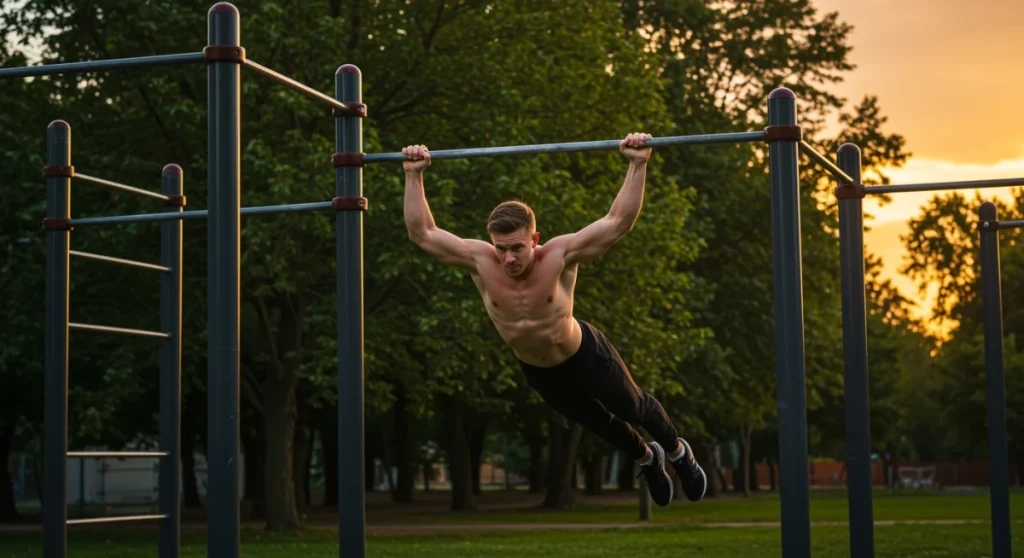
Achieving advanced calisthenics skills requires a dedicated and structured approach, and The 2025 Bodyweight Mastery Guide: Achieving Advanced Calisthenics Skills with a 6-Month Plan offers a clear roadmap to transform your bodyweight training into peak performance.
Welcome to the definitive guide for mastering advanced bodyweight movements. If you’ve been looking to elevate your fitness beyond basic exercises, this comprehensive 6-month plan is designed to help you achieve remarkable feats of strength and control. The 2025 Bodyweight Mastery Guide: Achieving Advanced Calisthenics Skills with a 6-Month Plan will take you from foundational strength to executing impressive skills like the human flag, planche, and front lever, all through progressive and sustainable training.
Understanding the Foundations of Advanced Calisthenics
Before diving into complex movements, it’s crucial to solidify your understanding of calisthenics fundamentals. Advanced skills aren’t built overnight; they are the culmination of consistent effort applied to basic exercises and a deep appreciation for proper form and muscle engagement. Many aspiring athletes rush into advanced movements without the necessary base, leading to injuries and frustration. This section will lay the groundwork for a successful and injury-free journey.
The core principle of calisthenics lies in utilizing your body’s weight as resistance. This means developing relative strength – the ability to move your own body effectively through space. Unlike weightlifting, where external loads are progressively increased, calisthenics mastery involves manipulating leverage, body positioning, and muscle activation to make exercises harder or easier. Understanding these mechanics is key to unlocking advanced skills.
Importance of foundational strength
Building a strong foundation involves mastering exercises like push-ups, pull-ups, dips, and squats. These movements, often considered basic, are the building blocks for more complex skills. For instance, a strong pull-up is essential for the front lever, and powerful dips are critical for the planche. Neglecting these basics can halt your progress significantly.
- Mastering full range of motion in basic exercises.
- Achieving high repetitions with good form.
- Developing isometric strength through holds.
- Ensuring proper muscle activation and mind-muscle connection.
Furthermore, understanding your body’s mechanics and identifying any weaknesses is vital. This early assessment allows you to tailor your training to address specific areas that need improvement, preventing plateaus and potential injuries down the line. A balanced approach to strength development across all major muscle groups will serve as your springboard to advanced calisthenics skills.
In conclusion, the journey to advanced calisthenics begins not with flashy moves, but with a robust understanding and consistent application of foundational strength principles. Investing time in perfecting your basics will yield significant dividends when you start tackling more complex skills, ensuring a safer and more effective progression.
The 6-Month Progressive Training Plan: Phase 1 (Months 1-2)
The initial phase of our 6-month plan focuses on building a solid base of strength, endurance, and body awareness. This period is critical for conditioning your muscles, tendons, and joints for the increased demands of advanced movements. We will emphasize consistent training with proper form, gradually increasing volume and intensity to prepare you for the next stages.
During months 1 and 2, your primary goal is to establish a strong routine and improve your proficiency in intermediate calisthenics exercises. This means performing exercises with perfect technique, controlling both the concentric and eccentric phases of each movement. Don’t underestimate the power of consistency and attention to detail in this phase; it sets the stage for everything that follows.
Developing strength and endurance
Your training will involve a mix of compound bodyweight exercises performed for repetitions and timed holds for isometric strength. The progressive overload principle will be applied by increasing reps, sets, reducing rest times, or introducing slightly harder variations of exercises.
- Week 1-4: Focus on 3-4 sets of 8-12 repetitions for push-ups, pull-ups (or assisted pull-ups), dips (or assisted dips), and squats. Incorporate plank holds for 30-60 seconds.
- Week 5-8: Introduce harder variations like incline push-ups to regular push-ups, negative pull-ups, and Bulgarian split squats. Increase plank holds to 60-90 seconds and add side planks.
- Frequency: Train 3-4 times per week, with at least one rest day between sessions.
Nutrition and recovery are equally important during this phase. Ensure you are consuming adequate protein for muscle repair and growth, and getting sufficient sleep. Proper hydration is also non-negotiable for optimal performance and recovery. Listen to your body and don’t push through sharp pain, as this could lead to setbacks.
In summary, Phase 1 is all about disciplined foundational work. By committing to consistent training, meticulous form, and smart recovery, you will build the essential physical attributes needed to progress into more challenging calisthenics skills over the next four months.
Phase 2 (Months 3-4): Transitioning to Intermediate Skills
With a solid foundation established from Phase 1, months 3 and 4 are dedicated to introducing and refining intermediate calisthenics skills. This phase bridges the gap between basic movements and advanced techniques, requiring greater body awareness, core strength, and specific muscle activation patterns. You’ll start working on progressions that directly lead to the advanced skills you aim to master.
Expect to spend significant time on skill-specific drills and isometric holds. The focus shifts from simply performing repetitions to holding specific body positions and understanding the leverage required for each movement. Patience is paramount here, as progress might feel slower than in the initial phase. Each small gain in hold time or form improvement is a victory.
Intermediate skill progressions
This period will see you tackling progressions for the front lever, planche, and human flag. It’s important to select one or two main skills to focus on at a time to avoid overtraining and ensure quality practice.
- Front Lever Progressions: Begin with tuck front lever holds, aiming for 10-20 seconds. Practice tuck front lever raises and negative front levers.
- Planche Progressions: Start with tuck planche holds, focusing on scapular protraction and leaning forward. Work on pseudo planche push-ups to build wrist and shoulder strength.
- Human Flag Progressions: Utilize a vertical pole or bar. Practice tuck human flag holds, skin the cat, and side plank variations with arm extended.
- Core Work: Intensify core training with L-sits, V-ups, and hollow body holds, all crucial for stability in advanced moves.
Active flexibility and mobility work should also become a regular part of your routine. Improving shoulder mobility, wrist flexibility, and hip flexor length will not only aid in achieving proper form for these skills but also help prevent common calisthenics-related injuries. Dedicate at least 15-20 minutes after each workout or on rest days to stretching.
In conclusion, Phase 2 is about strategic skill development and dedicated practice. By meticulously working through intermediate progressions and integrating flexibility, you will build the precise strength and control necessary to step into the realm of advanced calisthenics skills.
Phase 3 (Months 5-6): Mastering Advanced Skills and Integration
The final two months of the 6-month plan are where all your hard work culminates into achieving and refining advanced calisthenics skills. This phase demands extreme focus, consistency, and a deep understanding of your body’s capabilities. You will be pushing your limits, consolidating your strength, and integrating various skills into a fluid, impressive display of body control.
At this stage, you should be comfortably holding intermediate positions for extended periods. Now, the goal is to transition from these intermediate holds to the full advanced skills. This often involves reducing leverage, extending limbs, and maintaining perfect form under maximum tension. Your mental toughness will be tested just as much as your physical strength.
Advanced skill acquisition and refinement
During this phase, you will directly target the full advanced skills. It’s crucial to continue practicing the regressions if you feel your form slipping or if you’re having an off day. The progression should still be gradual, focusing on quality over quantity.
- Front Lever: Progress from advanced tuck to straddle front lever, then one-leg front lever, and finally the full front lever. Aim for 5-10 second holds.
- Planche: Move from advanced tuck planche to straddle planche, and then work towards the full planche. Integrate planche push-ups if your strength allows.
- Human Flag: Advance from tuck human flag to straddle human flag, then one-leg human flag, and ultimately the full human flag. Focus on holding for 3-5 seconds initially.
- Skill Integration: Start combining movements, such as L-sit to handstand, or pull-up to front lever, to improve dynamism and control.
Recovery becomes even more critical in this advanced phase. The intensity of training can put significant stress on your body, so prioritize sleep, active recovery, and proper nutrition. Consider incorporating deload weeks every 4-6 weeks to allow your body to fully recover and adapt, preventing overtraining syndrome and promoting continuous progress.
In conclusion, Phase 3 is the pinnacle of your 6-month journey, where dedication translates into mastery. By meticulously practicing advanced progressions, prioritizing recovery, and maintaining unwavering focus, you will achieve the advanced calisthenics skills you’ve worked so hard for, solidifying your bodyweight mastery.
Nutrition, Recovery, and Injury Prevention Strategies
Achieving advanced calisthenics skills is not solely about what you do in the gym; it’s heavily influenced by how you fuel and recover your body. Nutrition and recovery are the unsung heroes of any successful training program, especially one as demanding as advanced calisthenics. Neglecting these aspects can lead to stalled progress, increased injury risk, and overall burnout.
Proper nutrition provides the energy needed for intense workouts and the building blocks for muscle repair and growth. Recovery, including sleep and active rest, allows your body to adapt to the training stimulus, becoming stronger and more resilient. Injury prevention strategies ensure that your journey is sustainable and free from major setbacks, keeping you on track towards your goals.
Optimizing your diet for performance
A balanced diet rich in macronutrients and micronutrients is essential. Focus on whole, unprocessed foods to provide your body with the best fuel.
- Protein: Aim for 1.6-2.2 grams per kilogram of body weight to support muscle repair and growth. Sources include lean meats, poultry, fish, eggs, dairy, and legumes.
- Carbohydrates: Provide energy for workouts. Choose complex carbs like whole grains, fruits, and vegetables. Timing carb intake around your workouts can be beneficial.
- Fats: Essential for hormone production and overall health. Include healthy fats from avocados, nuts, seeds, and olive oil.
- Hydration: Drink plenty of water throughout the day, especially before, during, and after workouts, to maintain performance and aid recovery.
Recovery and injury prevention
Recovery is where your body adapts and grows. Prioritizing it is just as important as the training itself.
- Sleep: Aim for 7-9 hours of quality sleep per night. This is when most muscle repair and hormonal regulation occur.
- Active Recovery: Light activities like walking, stretching, or foam rolling can improve blood flow and reduce muscle soreness.
- Pre-habilitation: Incorporate exercises that strengthen stabilizing muscles and improve joint integrity. Rotator cuff exercises, wrist conditioning, and shoulder mobility drills are crucial for calisthenics.
- Listen to Your Body: Pay attention to persistent pain. It’s often a sign that something is wrong. Don’t be afraid to take extra rest days or deload when needed.
In conclusion, a holistic approach that integrates meticulous nutrition, proactive recovery, and diligent injury prevention strategies is fundamental for achieving and maintaining advanced calisthenics skills. These elements ensure your body is always ready to perform, adapt, and progress safely.
Mindset and Consistency: The Mental Game of Calisthenics
Beyond the physical aspects, mastering advanced calisthenics skills requires an incredibly strong mental game. Consistency, patience, and a resilient mindset are just as crucial as physical strength. The journey to advanced bodyweight mastery is often long, filled with plateaus and moments of doubt. How you navigate these challenges will ultimately determine your success.
Developing a robust mental framework involves setting realistic expectations, celebrating small victories, and maintaining a positive outlook even when progress seems slow. It’s about understanding that failure is not the opposite of success, but a part of the learning process. The ability to push through discomfort and remain committed to your goals is what separates those who achieve mastery from those who give up.
Cultivating a winning mindset
Your mental approach directly impacts your physical performance. A strong, positive mindset can help you overcome perceived limitations and stay motivated.
- Set Clear Goals: Break down your 6-month plan into smaller, achievable weekly and monthly targets. This makes the overall goal less daunting.
- Visualize Success: Regularly visualize yourself performing the advanced skills with perfect form. This can prime your mind and body for success.
- Embrace the Process: Understand that progress isn’t linear. There will be good days and bad days. Focus on the journey and the lessons learned, not just the outcome.
- Stay Consistent: Consistency trumps intensity. It’s better to have good, consistent workouts than sporadic, overly intense ones that lead to burnout or injury.
Finding a supportive community or a training partner can also significantly boost your motivation and accountability. Sharing your goals and progress with others can provide encouragement and fresh perspectives when you encounter challenges. Learning from experienced calisthenics athletes can also provide valuable insights and inspiration.
In conclusion, the mental game of calisthenics is as important as the physical training. By cultivating a resilient mindset, embracing consistency, and learning to navigate the inevitable challenges, you will not only achieve advanced calisthenics skills but also develop a mental fortitude that extends beyond your training.
Integrating Advanced Skills into Your Lifestyle for Longevity
Achieving advanced calisthenics skills is a significant accomplishment, but the journey doesn’t end there. The true mastery lies in integrating these skills into a sustainable lifestyle, ensuring longevity in your practice and continued physical well-being. This involves maintaining your strength, continually challenging yourself, and adapting your training as your body evolves.
Once you’ve achieved your target skills, the focus shifts from acquisition to maintenance and further refinement. This means finding a balance between intense training and adequate rest, incorporating variety into your routine, and always listening to your body. Calisthenics can be a lifelong pursuit, offering endless possibilities for physical expression and strength development.
Sustaining mastery and continued growth
To ensure longevity in your calisthenics journey, consider these strategies:
- Vary Your Training: Introduce new variations of skills or combine them in creative ways. Explore different training styles like endurance calisthenics or dynamic movements.
- Periodization: Implement cycles of higher intensity and lower intensity training to prevent plateaus and allow for recovery. This can involve deload weeks or focusing on different aspects of fitness.
- Cross-Training: Incorporate other forms of physical activity like yoga, swimming, or martial arts to improve overall athleticism, mobility, and prevent imbalances.
- Active Recovery and Mobility: Continue to prioritize active recovery, stretching, and mobility work to maintain joint health and flexibility, crucial for preventing injuries as you age.
Furthermore, consider becoming a mentor or sharing your knowledge with others. Teaching or guiding newer calisthenics enthusiasts can deepen your own understanding of the movements and reinforce your skills. It also contributes to the growth of the calisthenics community, fostering a supportive environment for everyone.
In conclusion, integrating advanced calisthenics skills into your lifestyle means adopting a long-term perspective. By continuously seeking new challenges, prioritizing holistic well-being, and contributing to the community, you can ensure a fulfilling and sustainable journey of bodyweight mastery for years to come.
| Key Aspect | Brief Description |
|---|---|
| Foundational Strength | Mastering basic exercises like pull-ups and push-ups with perfect form before progressing. |
| Progressive Overload | Gradually increasing the difficulty of exercises or hold times to stimulate adaptation. |
| Nutrition & Recovery | Essential for muscle repair, energy, and injury prevention, including proper diet and sleep. |
| Mental Fortitude | Patience, consistency, and a positive mindset are crucial for overcoming plateaus and setbacks. |
Frequently Asked Questions About Advanced Calisthenics
Mastering advanced calisthenics skills can vary greatly among individuals, but with consistent training and proper methodology, it typically takes 6 months to 2 years to achieve a solid command of skills like the front lever or planche. Factors such as starting strength, dedication, and recovery play a significant role in this timeline.
Yes, calisthenics is highly adaptable and suitable for almost everyone, from beginners to advanced athletes. It starts with fundamental movements that can be scaled down (e.g., knee push-ups) or scaled up (e.g., one-arm push-ups), making it accessible for all fitness levels to build strength and body control progressively.
Common mistakes include neglecting foundational strength, attempting advanced skills too soon, poor form, inconsistent training, and insufficient recovery. Rushing the process without building a strong base often leads to injuries, plateaus, and demotivation. Patience and a structured progression are key.
Nutrition is extremely important. It provides the energy for intense workouts, supports muscle repair and growth, and aids overall recovery. A diet rich in protein, complex carbohydrates, and healthy fats, along with adequate hydration, is crucial for optimizing performance and achieving your advanced calisthenics goals.
Training advanced calisthenics every day is generally not recommended for most people, as muscles need time to recover and grow. Overtraining can lead to fatigue, decreased performance, and increased injury risk. Aim for 3-4 intense sessions per week with active recovery or rest days in between.
Conclusion
Embarking on the journey to achieve advanced calisthenics skills is a testament to dedication and physical prowess. This 2025 Bodyweight Mastery Guide: Achieving Advanced Calisthenics Skills with a 6-Month Plan has outlined a clear, progressive path from foundational strength to mastering complex movements like the human flag, planche, and front lever. It emphasizes not only the physical training but also the critical roles of nutrition, recovery, injury prevention, and mental fortitude. By consistently applying these principles, you are not just building an impressive physique; you are cultivating a resilient mind and a sustainable fitness lifestyle that will serve you for years to come. Embrace the challenge, trust the process, and unlock your full bodyweight potential.