Kettlebell Training 2025: Master 5 Moves for 8-Week Transformation

The 2025 definitive kettlebell training guide offers a comprehensive 8-week program focused on mastering five core movements for a complete full-body transformation, enhancing both strength and cardiovascular fitness.
Are you ready to redefine your fitness journey in 2025? The world of fitness is constantly evolving, but some tools remain timeless for their unparalleled effectiveness. Among them, the kettlebell stands out as a versatile powerhouse. This guide is your blueprint to mastering the art of kettlebell training, specifically focusing on a holistic, full-body transformation in 8 weeks. It’s time to unlock a new level of strength, endurance, and functional fitness.
The Unrivaled Benefits of Kettlebell Training
Kettlebells offer a unique approach to strength and conditioning, setting them apart from traditional dumbbells and barbells. Their distinct shape and weight distribution challenge your body in ways that promote superior functional strength, explosive power, and cardiovascular endurance. This makes them an ideal tool for anyone looking to achieve a comprehensive fitness overhaul.
Beyond building muscle, kettlebell training significantly improves core stability, grip strength, and overall athleticism. The dynamic, multi-planar movements engage multiple muscle groups simultaneously, leading to a more efficient and effective workout. This holistic engagement is crucial for a true full-body transformation, targeting not just aesthetics but also practical, everyday strength.
Why Choose Kettlebells for Full-Body Fitness?
Opting for kettlebells means embracing a training methodology that prioritizes integrated movement patterns over isolated muscle work. This approach mirrors real-life activities, preparing your body for a wide range of physical demands. The continuous motion inherent in many kettlebell exercises also elevates your heart rate, providing a potent cardiovascular challenge.
- Enhanced Functional Strength: Develops strength applicable to daily tasks and sports.
- Improved Cardiovascular Health: Elevates heart rate for a significant cardio workout.
- Increased Core Stability: Engages abdominal and back muscles with every movement.
- Better Grip Strength: The unique handle design naturally strengthens your grip.
The benefits extend to improved mobility and flexibility, as kettlebell exercises often involve a wide range of motion. This can help prevent injuries and enhance overall physical well-being. By integrating kettlebells into your routine, you’re not just working out; you’re cultivating a more resilient and capable body.
Understanding the Kettlebell: Your Essential Tool
Before diving into the movements, it’s crucial to understand the kettlebell itself. This cast-iron or steel ball with a handle is deceptively simple yet incredibly effective. Its center of mass is located outside the handle, which creates a unique leverage challenge, forcing your body to stabilize and control the weight throughout dynamic movements.
Choosing the right kettlebell weight is paramount for both safety and effectiveness. Starting too heavy can lead to poor form and injury, while starting too light might not provide sufficient stimulus for growth. For beginners, a good starting point for men is often 16-24 kg (35-53 lbs) and for women, 8-16 kg (18-35 lbs), but this can vary based on individual fitness levels.
Selecting the Right Weight for Your Journey
Experimentation is key when selecting your kettlebell. You should be able to perform 5-10 repetitions of a given exercise with good form, feeling challenged but not overwhelmed. It’s always better to start lighter and gradually increase the weight as your strength and technique improve. Remember, form over weight is the golden rule in kettlebell training.
- Beginner Weight (Women): 8-12 kg (18-26 lbs) for swings; 4-8 kg (9-18 lbs) for presses.
- Beginner Weight (Men): 16-20 kg (35-44 lbs) for swings; 8-12 kg (18-26 lbs) for presses.
- Progression: Increase weight incrementally once you can comfortably perform sets with perfect form.
Investing in a good quality kettlebell is also important. Look for those with a smooth handle that won’t chafe your hands and a balanced design. Many reputable brands offer excellent options that will last a lifetime. Understanding and respecting your kettlebell is the first step towards a successful training program.
Mastering the 5 Core Kettlebell Movements
The foundation of effective kettlebell training lies in mastering a few fundamental movements. These five core exercises, when performed correctly, engage your entire body and provide a comprehensive workout. They are the backbone of our 8-week transformation plan, designed to build strength, power, and endurance.
Each movement has specific technical nuances that are critical for maximizing benefits and preventing injury. Take the time to practice each one diligently, perhaps even recording yourself to check your form against expert demonstrations. Patience and precision in learning these movements will pay dividends in your fitness journey.
1. The Kettlebell Swing: The Powerhouse
The kettlebell swing is arguably the most iconic and effective kettlebell exercise. It’s a powerful hip-hinge movement that builds explosive power in your glutes and hamstrings, strengthens your core, and improves cardiovascular fitness. It is not a squat; the movement originates from the hips, not the knees.
- Setup: Stand with feet shoulder-width apart, kettlebell a foot in front. Hinge at hips, grasp kettlebell with both hands.
- Hike Pass: Hike the kettlebell back between your legs, keeping your back flat and shoulders packed.
- Explosion: Drive hips forward powerfully, squeezing glutes, allowing the kettlebell to float to chest height.
- Control: Let the kettlebell fall back, hinging at the hips for the next repetition.
Focus on generating power from your hips, not your arms. Your arms should act as ropes, guiding the kettlebell rather than lifting it. This full-body movement is a cornerstone of any effective kettlebell program.
2. The Goblet Squat: Foundation of Strength
The goblet squat is an excellent exercise for building lower body strength and improving squat mechanics. Holding the kettlebell close to your chest acts as a counterbalance, allowing you to maintain an upright torso and achieve greater depth in your squat. This makes it particularly beneficial for those working on their squat form.
- Setup: Hold the kettlebell by the horns against your chest, feet slightly wider than shoulder-width, toes pointed slightly out.
- Descent: Squat down by pushing your hips back and bending your knees, keeping your chest up and elbows inside your knees.
- Depth: Aim for parallel or deeper, maintaining a strong, upright posture.
- Ascent: Drive through your heels to return to the starting position, squeezing your glutes at the top.
The goblet squat is fantastic for developing core strength and hip mobility, making it a staple for anyone looking to build a strong, stable lower body.
3. The Turkish Get-Up: The Ultimate Full-Body Movement
The Turkish Get-Up (TGU) is a complex, multi-stage movement that builds incredible full-body strength, stability, and mobility. It involves transitioning from a lying position to standing, all while holding a kettlebell overhead. This exercise demands concentration and control, making it a powerful tool for developing body awareness.
- Starting Position: Lie on your back, kettlebell in one hand, arm extended straight up. Same-side knee bent, foot flat.
- Roll to Elbow: Roll onto your opposite elbow, keeping the kettlebell arm locked.
- Roll to Hand: Push up onto your opposite hand, maintaining the locked arm overhead.
- Sweep Leg: Sweep your straight leg back and under, transitioning to a kneeling lunge position.
- Stand Up: Stand up from the lunge, keeping the kettlebell overhead.
- Reverse: Carefully reverse the steps to return to the starting position.
The TGU is not about speed; it’s about controlled, deliberate movement. It’s an exercise that truly integrates your entire body, enhancing stability from head to toe.
4. The Kettlebell Press: Upper Body Power
The kettlebell press is a foundational upper-body strength exercise that targets your shoulders, triceps, and core. Unlike a dumbbell, the kettlebell’s offset weight distribution challenges your shoulder stabilizers more intensely, leading to greater strength and resilience. This translates to stronger, healthier shoulders.
- Rack Position: Hold the kettlebell in the rack position: bell resting on your forearm, handle in the crook of your hand, elbow tucked in.
- Press: Brace your core and press the kettlebell straight overhead, locking your arm out at the top.
- Descent: Slowly lower the kettlebell back to the rack position with control.
- Stability: Maintain a tight core and stable base throughout the movement to protect your spine.
Whether you perform a strict press or a push press, the kettlebell press is an excellent way to build powerful and resilient shoulders, crucial for any full-body regimen.
5. The Renegade Row: Core and Back Strength
The renegade row is a dynamic, full-body exercise that combines a plank with a rowing motion, effectively targeting your back, shoulders, arms, and core. It’s a challenging movement that demands significant core stability to prevent rotation and maintain proper form. This exercise is key for developing anti-rotational core strength.
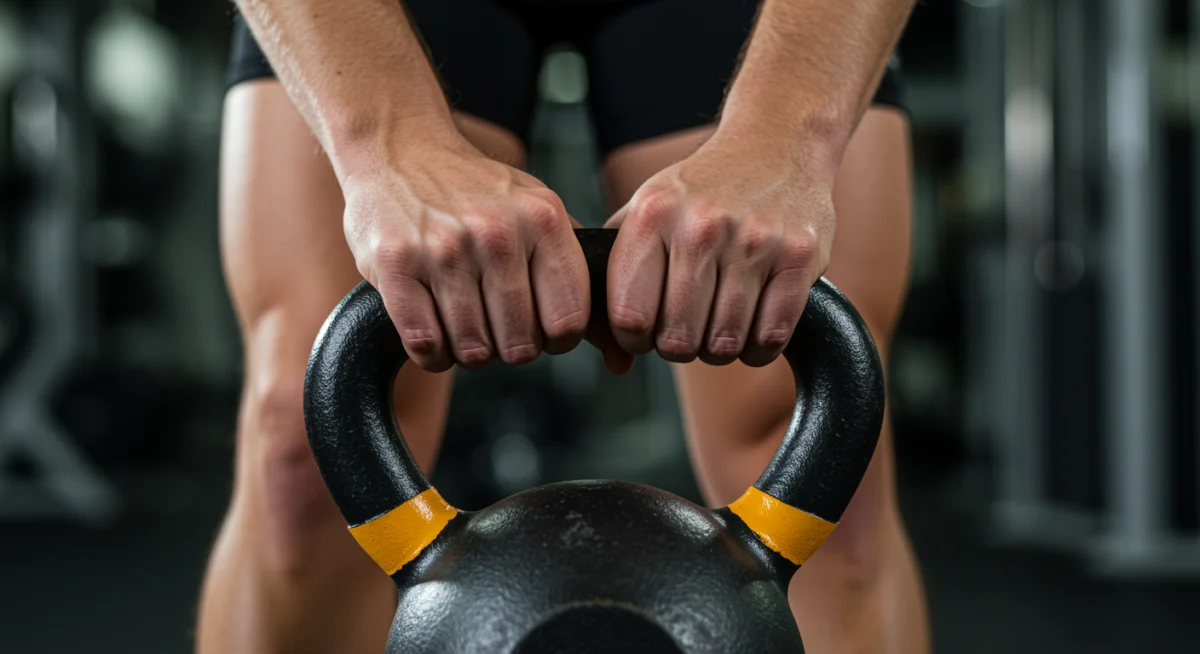
Performing the renegade row requires two kettlebells of equal weight. Ensure your grip is secure and your body forms a straight line from head to heels throughout the exercise. The goal is to minimize hip movement as you row.
- Setup: Place two kettlebells on the floor, shoulder-width apart. Assume a plank position with hands gripping the kettlebell handles, core tight.
- Row: Keeping your body stable, row one kettlebell towards your hip, squeezing your shoulder blade.
- Control: Slowly lower the kettlebell back to the floor. Alternate arms, maintaining a strong plank.
- Stability: Focus on keeping your hips as still as possible; avoid rocking side to side.
The renegade row is a fantastic exercise for building a strong, stable core and powerful back muscles, essential components of a truly transformed physique.
Your 8-Week Kettlebell Transformation Program
This 8-week program is designed to progressively build your strength, endurance, and mastery of the five core kettlebell movements. It’s structured to provide consistent challenge without overtraining, allowing your body to adapt and grow. Consistency is your most powerful tool in this journey.
The program emphasizes compound movements, meaning you’ll be working multiple muscle groups simultaneously, leading to efficient workouts and significant caloric expenditure. Remember to listen to your body, prioritize proper form, and adjust weights as needed. This is your personal journey, and adaptation is key.
Weekly Structure and Progression
Each week, you’ll engage in 3-4 full-body kettlebell workouts, allowing for rest days in between to facilitate recovery and muscle repair. The intensity and volume will gradually increase, ensuring continuous progress. Incorporate a thorough warm-up before each session and a cool-down afterward.
Weeks 1-2 will focus on learning and refining the movements with lighter weights and higher repetitions. Weeks 3-4 will introduce heavier weights and fewer repetitions to build strength. Weeks 5-6 will combine elements of both, with varied rep schemes. Weeks 7-8 will challenge your newfound strength and endurance with more complex sets and circuits.
- Warm-up (5-10 minutes): Light cardio, dynamic stretches.
- Workout (30-45 minutes): Focus on 2-3 core movements per session, rotating through them.
- Cool-down (5-10 minutes): Static stretches, foam rolling.
- Rest Days: Essential for recovery and muscle growth. Active recovery like walking is encouraged.
Remember to track your progress. Journaling your weights, sets, and repetitions will help you see how far you’ve come and stay motivated. This structured approach ensures you maximize your potential within the 8-week timeframe.
Nutrition and Recovery: Pillars of Transformation
A successful physical transformation extends far beyond the gym floor. Your progress with kettlebell training will be significantly influenced by what you eat and how well you recover. Neglecting these aspects can hinder your results and even lead to burnout or injury. Think of nutrition and recovery as equally important components of your training.
Proper fueling provides the energy needed for intense workouts and the building blocks for muscle repair and growth. Adequate rest allows your body to adapt to the stress of training, making you stronger for your next session. Without these pillars, your hard work with the kettlebell may not yield the desired outcomes.
Fueling Your Body for Peak Performance
Focus on a balanced diet rich in whole, unprocessed foods. Prioritize lean proteins for muscle repair, complex carbohydrates for sustained energy, and healthy fats for overall health. Hydration is also critical; ensure you’re drinking plenty of water throughout the day, especially around your workouts.
- Protein: Lean meats, poultry, fish, eggs, legumes, protein supplements.
- Carbohydrates: Whole grains, fruits, vegetables, sweet potatoes.
- Healthy Fats: Avocados, nuts, seeds, olive oil.
- Hydration: Aim for 8-10 glasses of water daily, more on training days.
Consider consulting a nutritionist for personalized guidance, especially if you have specific dietary needs or goals. Small, consistent changes to your diet can make a profound difference in your energy levels and recovery.
Optimizing Recovery for Sustainable Gains
Sleep is arguably the most underrated aspect of fitness. Aim for 7-9 hours of quality sleep per night to allow your body to repair and rejuvenate. Incorporate active recovery days, such as light walks or yoga, to promote blood flow and reduce muscle soreness. Stress management techniques can also play a vital role.
- Sleep: Prioritize 7-9 hours of uninterrupted sleep.
- Active Recovery: Gentle activities like walking, stretching, or foam rolling.
- Stress Management: Meditation, deep breathing, hobbies to reduce cortisol levels.
By giving equal attention to your nutrition and recovery, you’ll not only enhance your kettlebell training results but also improve your overall health and well-being, paving the way for a sustainable fitness lifestyle.
| Key Aspect | Brief Description |
|---|---|
| Kettlebell Swing | Hip-hinge movement building explosive power, glutes, hamstrings, and cardio. |
| Turkish Get-Up | Complex full-body exercise for strength, stability, and mobility from ground to standing. |
| 8-Week Program | Structured progression for mastering movements, increasing strength, and improving endurance. |
| Nutrition & Recovery | Crucial for muscle repair, energy, and overall health to support training gains. |
Frequently Asked Questions About Kettlebell Training
For optimal results, aim for 3-4 full-body kettlebell workouts per week. This allows sufficient time for muscle recovery and growth, which is crucial for strength gains and preventing overtraining. Consistency over intensity is key for long-term progress.
For beginners, the kettlebell swing is arguably the most important exercise to master. It teaches the fundamental hip-hinge movement, builds explosive power, and engages the entire posterior chain. Proper form is critical; start with lighter weights and focus on technique before increasing load.
Yes, kettlebell training is highly effective for weight loss. Its dynamic, full-body movements elevate your heart rate, burn significant calories, and build muscle mass, which boosts your metabolism. Combined with a balanced diet, kettlebells can accelerate your weight loss journey.
Start with a weight that allows you to perform 5-10 repetitions of an exercise with good form, feeling challenged but not strained. For swings, men often start with 16-20 kg and women with 8-12 kg. For presses, slightly lighter weights are usually appropriate. Prioritize form over heavy lifting.
Common mistakes include rounding the back during swings, lifting with arms instead of hips, neglecting proper warm-ups, and increasing weight too quickly. Always prioritize learning correct form from reputable sources and listen to your body to prevent injury and maximize benefits.
Conclusion
Embarking on a kettlebell training journey in 2025 offers a powerful path to a stronger, more resilient you. By dedicating yourself to mastering the five core movements outlined in this guide and committing to an 8-week program, you are setting the stage for a remarkable full-body transformation. Remember that consistency, proper form, and attention to nutrition and recovery are just as crucial as the exercises themselves. Embrace the challenge, stay focused, and witness the incredible power of the kettlebell to reshape your fitness and well-being.